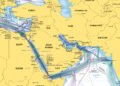
Airspace Closures Disrupt Global Aviation Network
Military escalation in West Asia has forced several countries to restrict or completely close portions of their airspace, prompting airlines to take longer alternate routes to avoid conflict zones.
The closure of strategic aviation corridors over Iran and surrounding areas has disrupted one of the world’s most critical transit regions. Flights connecting Asia with Europe and North America typically pass through this airspace, making rerouting both costly and operationally complex.
Indian carriers including Air India and IndiGo are among the airlines most exposed to the disruption. These carriers rely heavily on West Asian corridors for international routes linking India with major destinations in Europe and the United States.
With airspace restrictions in place, airlines are now forced to take longer detours via Central Asia or southern routes, significantly increasing fuel consumption and flight times.
Industry estimates suggest that these diversions could increase fuel burn by 10–15% per flight, while adding up to 90 minutes of extra flying time on several routes.
For an industry already operating on thin margins, the additional costs are substantial.
Oil Prices Spike as Supply Risk Returns
The conflict has also triggered a sharp reaction in global energy markets, with crude oil prices surging amid fears that the confrontation could threaten supply routes across the Middle East.
The region accounts for nearly one-third of the world’s oil exports, and any escalation raises concerns about disruptions to production, transport, or shipping lanes such as the Strait of Hormuz.
Oil traders immediately priced in geopolitical risk, pushing benchmark crude prices sharply higher.
For aviation companies, this presents a double blow.
Fuel already accounts for 30–40% of airline operating costs, and any sustained rise in crude prices quickly erodes profitability.
If oil prices remain elevated, analysts warn that airlines could face multi-billion-dollar cost increases globally, forcing carriers to reconsider ticket pricing, route structures, and expansion plans.
Indian carriers are particularly vulnerable because many operate without extensive fuel hedging strategies, leaving them exposed to sudden price shocks.
Rupee Weakens as Markets React to Global Risk
The geopolitical shock has also spilled into currency markets.
The Indian rupee weakened against the US dollar, reflecting rising crude prices and increased risk aversion among global investors.
India imports more than 85% of its crude oil, making the economy highly sensitive to energy price spikes. A stronger dollar combined with rising oil prices typically widens the country’s trade deficit and increases inflationary pressure.
A weaker rupee further compounds the airline industry’s challenges because aviation fuel and aircraft leasing payments are largely denominated in dollars.
This means airlines face higher fuel bills and increased leasing costs simultaneously, squeezing margins even further.
Indian Airlines Face Potential $180 Billion Industry Exposure
Industry analysts estimate that the combined financial exposure for Indian aviation linked to disruptions in West Asia could reach $180 billion if the conflict escalates or continues for an extended period.
This figure includes:
- Higher fuel costs
- Longer flight routes
- Operational inefficiencies
- Passenger demand fluctuations
- Currency depreciation impacts
The financial strain is especially significant for airlines currently expanding international operations.
Over the past few years, Indian carriers have been aggressively adding long-haul routes, aiming to transform India into a major global aviation hub.
However, prolonged geopolitical instability could slow this expansion by increasing operational risk and uncertainty.
Airlines may be forced to temporarily suspend certain routes, adjust flight schedules, or impose fuel surcharges on tickets.
Broader Economic Implications
The crisis also carries wider implications beyond aviation.
If tensions escalate further, oil prices could climb significantly higher, affecting transportation, manufacturing, and logistics sectors globally.
For India, sustained crude prices above $90–$100 per barrel could:
- Increase inflation
- Pressure government fiscal balances
- Widen the current account deficit
- Reduce consumer spending power
Financial markets are already responding cautiously as investors monitor developments in the region.
Any sign of deeper military involvement or disruption to oil infrastructure could trigger further volatility in global markets.
Strategic Risks Still Unfolding
While airlines are adapting to immediate operational challenges, the larger question remains how long the conflict will persist.
If tensions de-escalate quickly, the aviation sector may absorb the temporary disruption. However, a prolonged confrontation could reshape global flight corridors and fuel cost dynamics for months.
For now, airlines, energy traders, and policymakers are watching developments closely as geopolitical risk once again takes centre stage in global markets.
The conflict has demonstrated how quickly regional tensions can cascade across industries—from oil markets and currencies to aviation networks and international trade.