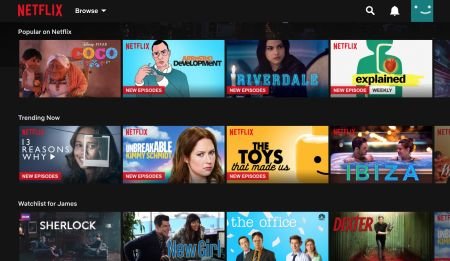
Large American media companies are shifting strategy by licensing their film and television content to competing streaming platforms, reflecting a broader recalibration across the global entertainment industry as companies prioritize profitability over rapid subscriber growth.
The move marks a significant change from the early years of the streaming boom, when studios aggressively pulled content from competitors in order to build exclusive libraries for their own platforms.
Now, as streaming economics become more complex and production costs continue to climb, studios are rediscovering the financial value of selling content rights to rival platforms.
Industry executives say the shift reflects a new phase in the streaming market, where balancing subscription revenue with licensing income has become critical to sustaining profitability.
Streaming Wars Enter a New Phase
The rapid expansion of streaming services over the past decade dramatically transformed the entertainment business.
Major studios launched their own platforms in an effort to compete with early market leaders such as Netflix, leading to the creation of services including Disney+, Peacock, Paramount+, and Max.
However, the strategy of keeping content exclusive to proprietary platforms has proven costly.
Streaming services require massive investment in original programming, technology infrastructure, and global marketing campaigns. For many companies, those investments have taken years to translate into consistent profits.
Executives now say that licensing content to other platforms can generate immediate revenue while expanding the audience reach of their productions.
Studios Reopen Licensing Pipelines
Several major media companies have begun selling streaming rights to competitors as part of a broader financial restructuring.
For example, Warner Bros. Discovery has increasingly licensed films and television shows to external platforms while continuing to develop its own streaming service.
This hybrid approach allows studios to monetize their content libraries more efficiently without relying solely on subscription growth.
In many cases, older catalog titles are licensed to other platforms while new flagship content remains exclusive.
The strategy also helps studios offset rising production costs, which have increased sharply as streaming services compete to produce high-budget original programming.
Financial Pressures Reshaping Strategy
The economics of streaming have become a central concern for entertainment companies.
Producing premium television series and blockbuster films often costs tens or even hundreds of millions of dollars, and the return on those investments depends heavily on subscriber retention and platform growth.
In response, companies are increasingly adopting more disciplined financial strategies.
Some studios have reduced the number of high-budget productions while focusing on projects with clearer commercial potential.
Others have expanded licensing agreements to generate predictable revenue streams from existing content libraries.
The shift reflects a broader realization across the industry that streaming alone cannot replace the multiple revenue channels that historically supported the entertainment business.
Hollywood Rebalances Distribution Models
The renewed emphasis on licensing also signals a broader transformation in how Hollywood distributes content.
Traditionally, studios relied on a sequence of revenue windows including theatrical releases, television broadcasting, and home video sales.
Streaming disrupted this model by concentrating distribution on a single platform.
Now, studios appear to be moving toward a hybrid system that blends:
- Exclusive streaming premieres
- Content licensing to other platforms
- Theatrical releases for major films
- International distribution deals
Industry analysts say this diversified strategy can reduce financial risk while maximizing the value of intellectual property.
Competition in the Streaming Market
The streaming industry remains highly competitive despite the strategic shifts.
Global platforms such as Amazon and Apple continue investing heavily in original programming to attract subscribers to their ecosystems.
At the same time, traditional media companies are trying to balance streaming expansion with profitability.
Some platforms have introduced advertising-supported subscription tiers to increase revenue while maintaining competitive pricing.
Others are bundling services or exploring partnerships with telecom operators to expand distribution.
These strategies highlight the evolving nature of the streaming market as companies search for sustainable business models.
What Comes Next
The shift toward licensing content suggests that the streaming wars are entering a more mature phase.
Rather than competing solely on exclusivity, studios are increasingly focused on maximizing the financial value of their content libraries.
Industry observers expect more licensing deals and cross-platform collaborations in the coming years, particularly as companies seek to stabilize streaming finances.
For consumers, the change could mean a more fragmented but also more dynamic streaming landscape, where popular shows and films move between platforms over time.
For the media industry, the message is clear: in the new economics of streaming, content is not just a tool for attracting subscribers—it is also a valuable asset that can generate revenue across multiple platforms.