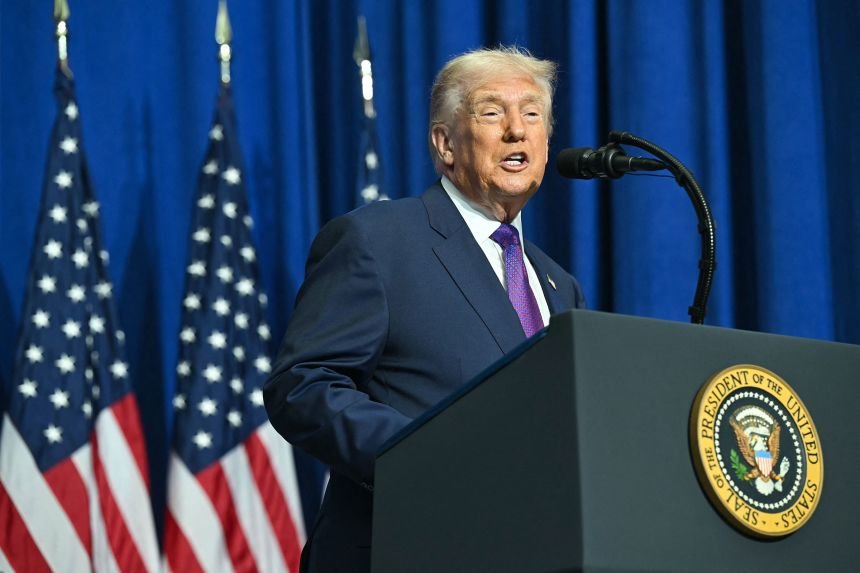
Former U.S. president Donald Trump has said he is open to the idea of allowing civilian militias to assist in securing the United States’ southern border, a suggestion that has triggered immediate debate among lawmakers, legal experts, and security analysts.
The remarks come amid renewed political focus on immigration and border enforcement in the United States. Trump indicated that volunteer militias could potentially support federal and state authorities in monitoring border regions, though he did not outline a detailed policy framework for how such groups would be organized or regulated.
The proposal has raised concerns about the legal authority of civilian armed groups and the potential implications for law enforcement and civil rights.
Border Security Returns to the Political Spotlight
Border control has been one of the defining issues in U.S. politics over the past decade, particularly along the southern frontier with Mexico.
Political leaders have frequently debated the scale of migration flows, the resources allocated to border enforcement, and the role of federal agencies responsible for immigration control.
Trump’s comments reflect a broader push among some political groups to strengthen border enforcement mechanisms amid continued migration pressures.
Supporters of tougher policies argue that additional personnel—whether federal agents, state forces, or volunteers—could help reduce illegal crossings and improve surveillance across remote border regions.
However, critics warn that allowing civilian militias to participate in security operations could complicate law enforcement and potentially lead to dangerous confrontations.
Legal and Constitutional Questions
The suggestion has raised significant legal questions about the authority of private militias to conduct security operations.
In the United States, immigration enforcement is primarily handled by federal agencies such as U.S. Customs and Border Protection, which operates under the Department of Homeland Security.
Legal experts note that while individuals can assist law enforcement in limited ways, armed civilian groups operating independently could face constitutional and regulatory challenges.
Many states also have laws restricting the activities of unauthorized paramilitary organizations.
Civil rights groups argue that allowing militias to patrol border regions could increase the risk of violence, profiling, and unlawful detentions.
Rising Political Polarization
Trump’s remarks have intensified political debate in Washington as immigration remains one of the most polarizing issues in U.S. politics.
Some conservative lawmakers have supported the idea of expanding community involvement in border security, while others have emphasized the need to strengthen federal enforcement resources instead.
Opponents argue that the proposal risks undermining established law enforcement structures and could create confusion about authority in sensitive security environments.
The debate also reflects broader political divisions over immigration policy, asylum procedures, and border infrastructure funding.
Security Experts Warn of Potential Risks
Security analysts say integrating militias into official border operations would present significant operational challenges.
Professional border enforcement agencies require specialized training in areas such as:
- Immigration law
- Rules of engagement
- Human rights compliance
- Crisis de-escalation
- Cross-border coordination
Allowing armed volunteer groups to operate in border regions could increase the risk of misunderstandings or confrontations with migrants, smugglers, or law enforcement officials.
Experts also warn that the presence of militias could complicate intelligence gathering and operational planning for official agencies.
Historical Context of U.S. Militias
Civilian militias have long existed in American political history, rooted in early colonial and revolutionary traditions.
In modern times, however, militia groups typically operate as private organizations rather than official security forces.
Occasionally, armed volunteer groups have conducted informal patrols near the southern border, claiming to assist authorities by reporting suspicious activity.
These efforts have often drawn criticism from civil rights advocates and law enforcement officials, who argue that unauthorized patrols can create safety risks.
What Comes Next
Trump’s remarks are likely to fuel continued debate over the role of civilian groups in national security operations as the United States moves deeper into a politically charged election cycle.
Any formal policy allowing militias to participate in border enforcement would face significant legal scrutiny and would likely require legislative action at both federal and state levels.
For now, federal agencies remain responsible for border security operations, and officials have not indicated any immediate plans to integrate civilian militias into official enforcement frameworks.
However, the discussion highlights how immigration and border security are likely to remain central issues shaping political discourse in the United States in the coming years.