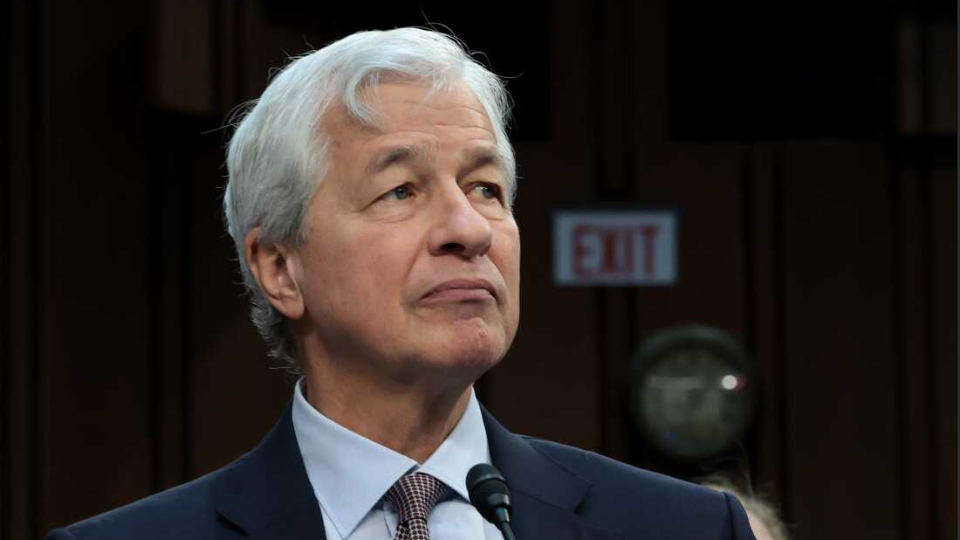
JPMorgan Chase has acknowledged for the first time that it closed the bank accounts of President Donald Trump and several of his businesses following the January 6, 2021, attack on the U.S. Capitol. This admission is the latest development in a legal battle over the controversial practice known as “debanking.”
New Details from Court Filings
The bank’s admission appeared in a court filing submitted this week as part of Trump’s $5 billion lawsuit against JPMorgan and its CEO, Jamie Dimon. The President alleges that his accounts were closed for political reasons, causing significant disruption to his business operations.
In the filing, Dan Wilkening, JPMorgan’s former chief administrative officer, wrote: “In February 2021, JPMorgan informed Plaintiffs that certain accounts maintained with JPMorgan’s CB [Commercial Bank] and PB [Private Bank] would be closed.”
Prior to this filing, JPMorgan had never publicly admitted to closing the President’s accounts, choosing instead to speak only in general terms about its account closing policies.
Legal Disputes and Locations
While Trump originally filed the lawsuit in Florida, JPMorgan Chase is attempting to move the case to New York. The bank argues that New York is where the accounts were held and where the majority of Trump’s business operations were located at the time.
Trump’s legal team has accused the bank of trade libel. They also claim that Jamie Dimon violated Florida’s Unfair and Deceptive Trade Practices Act. According to the lawsuit, Trump tried to resolve the issue personally with Dimon, who reportedly promised to investigate but failed to follow up.
The Impact of “Debanking”
The lawsuit further alleges that JPMorgan placed Trump and his companies on a reputational “blacklist.” His lawyers claim this list is used by various banks to prevent certain clients from opening future accounts.
“In a devastating concession, JPMorgan Chase admitted to intentionally de banking President Trump, his family, and his businesses,” Trump’s lawyers said in a statement.
Debanking occurs when a financial institution closes a customer’s account or refuses to provide loans and services. While JPMorgan maintains the suit has no merit, the issue has become a major political flashpoint. Conservative leaders argue that banks use “reputational risk” as an excuse to discriminate against them.
A Growing Trend in Banking Regulation
This is not the first time Trump has challenged a major financial institution. The Trump Organization filed a similar lawsuit against Capital One in March 2025, which is still ongoing.
In response to these incidents, federal banking regulators under the Trump administration have recently taken steps to prevent banks from using “reputational risk” as a valid reason to deny services to customers. This policy shift aims to curb the practice of debanking across the financial industry.
Also Read : Trump Raises Global Tariffs to 15% Samir Arora Explains the Outlook for India