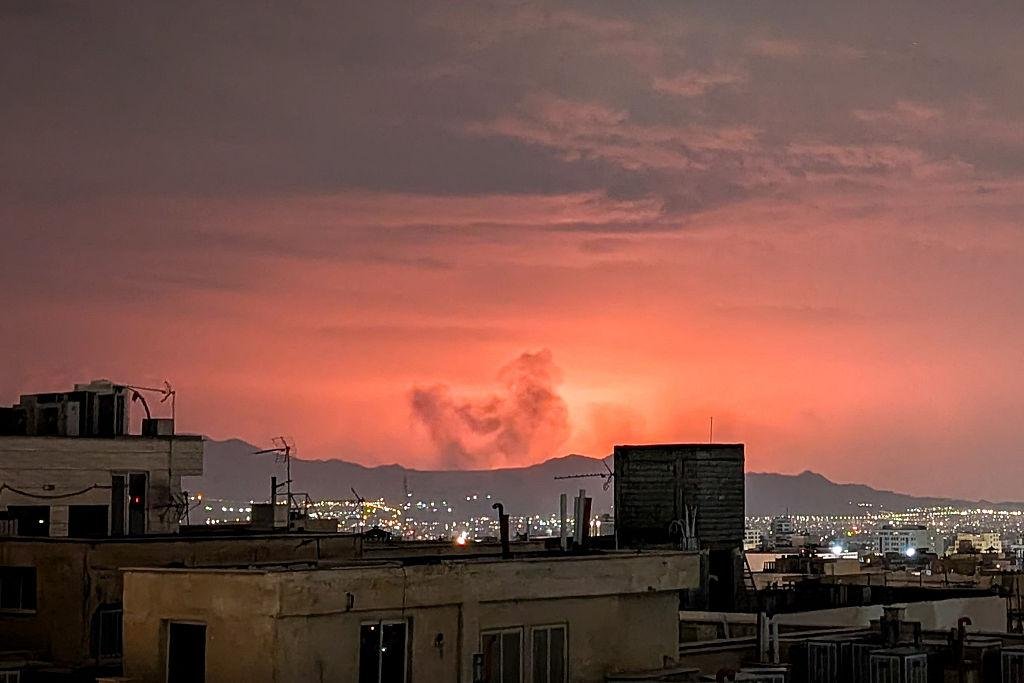
A series of powerful explosions struck oil depots in Tehran late Sunday after reported strikes by Israel, triggering massive fires that illuminated the Iranian capital’s skyline and sent thick plumes of smoke billowing across the city.
The attacks mark a significant escalation in the ongoing confrontation between Iran and Israel, raising the risk of a wider regional conflict that could destabilize global energy markets and further strain geopolitical relations in the Middle East.
Videos circulating on social media showed towering flames and dense smoke engulfing large fuel storage facilities in the outskirts of Tehran, turning the night sky orange as emergency responders struggled to contain the blaze. Local residents reported hearing multiple explosions before the fires erupted, suggesting coordinated strikes targeting energy infrastructure.
Strategic infrastructure targeted in Tehran
Preliminary reports indicate that the strikes hit major oil storage depots used for fuel distribution in the Iranian capital. Such facilities play a critical role in the country’s domestic fuel supply chain, making them high-value strategic targets.
While Iranian authorities initially confirmed explosions and fires at energy infrastructure sites, officials did not immediately provide a detailed casualty count or the extent of damage. Emergency crews were seen battling large fires through the night as authorities attempted to secure the affected areas.
The attack appears to represent a shift toward targeting critical infrastructure inside Iran rather than proxy groups or military installations elsewhere in the region. Analysts say striking fuel depots could disrupt internal logistics and send a powerful signal about Israel’s operational reach.
The developments come amid intensifying hostilities between the two long-standing adversaries, following a series of tit-for-tat attacks and mounting military rhetoric.
Escalation raises fears of regional war
The strike has triggered alarm across diplomatic and security circles, particularly in United States and other Western capitals concerned about the possibility of a broader regional confrontation.
Washington has repeatedly urged restraint in recent weeks as tensions between Iran and Israel escalated through cyber operations, proxy militia engagements, and targeted strikes across the region.
A direct attack on infrastructure within Tehran could provoke retaliation from Iran or allied groups across the Middle East, potentially widening the conflict to multiple fronts.
Iran has long maintained a network of regional partners and proxy forces in countries including Lebanon, Syria, and Iraq. Military analysts warn that any retaliatory response could involve missile strikes, drone attacks, or operations targeting Israeli assets or Western interests.
Such a scenario would significantly increase geopolitical risk in one of the world’s most strategically sensitive regions.
Energy markets watching closely
Beyond the immediate security implications, the strikes have drawn attention from global energy markets due to Iran’s role as a major oil producer.
Iran sits on some of the world’s largest hydrocarbon reserves and remains a critical player in the global energy system despite sanctions and export restrictions.
Any disruption to Iranian fuel infrastructure or escalation in regional hostilities could impact crude oil supply routes across the Middle East, including shipping lanes through the Strait of Hormuz — one of the most important chokepoints for global energy trade.
Nearly 20% of the world’s oil shipments pass through the narrow waterway each day. Analysts warn that prolonged tensions or retaliatory action could trigger sharp volatility in global crude prices.
Energy traders are closely monitoring developments for signs of supply disruption, sanctions responses, or potential military escalation affecting key oil-producing regions.
Tehran’s response and uncertainty ahead
Iranian officials have not yet formally confirmed the scale of damage or whether casualties occurred at the targeted sites, but authorities have vowed to respond to what they describe as acts of aggression.
State media reported that emergency units were deployed across the affected areas and that security forces were investigating the cause and impact of the explosions.
Israel, which rarely publicly acknowledges operations inside Iran, has not officially commented on the reported strikes. However, the country has repeatedly signaled its willingness to act militarily to counter threats from Iran’s military and nuclear programs.
The latest developments add to an already volatile security environment in the Middle East, where conflicts involving state actors and regional militias have intensified in recent months.
Diplomatic channels are now under pressure to prevent further escalation, but the targeting of energy infrastructure within Tehran itself suggests the confrontation may be entering a more dangerous phase.
For global markets, the implications extend beyond geopolitics. Energy traders, investors, and policymakers are closely watching whether the incident triggers retaliatory action that could threaten supply routes or destabilize oil-producing regions.
With tensions between Israel and Iran now reaching one of their most direct and visible confrontations in years, the coming days may prove critical in determining whether the crisis remains contained — or expands into a broader regional conflict.