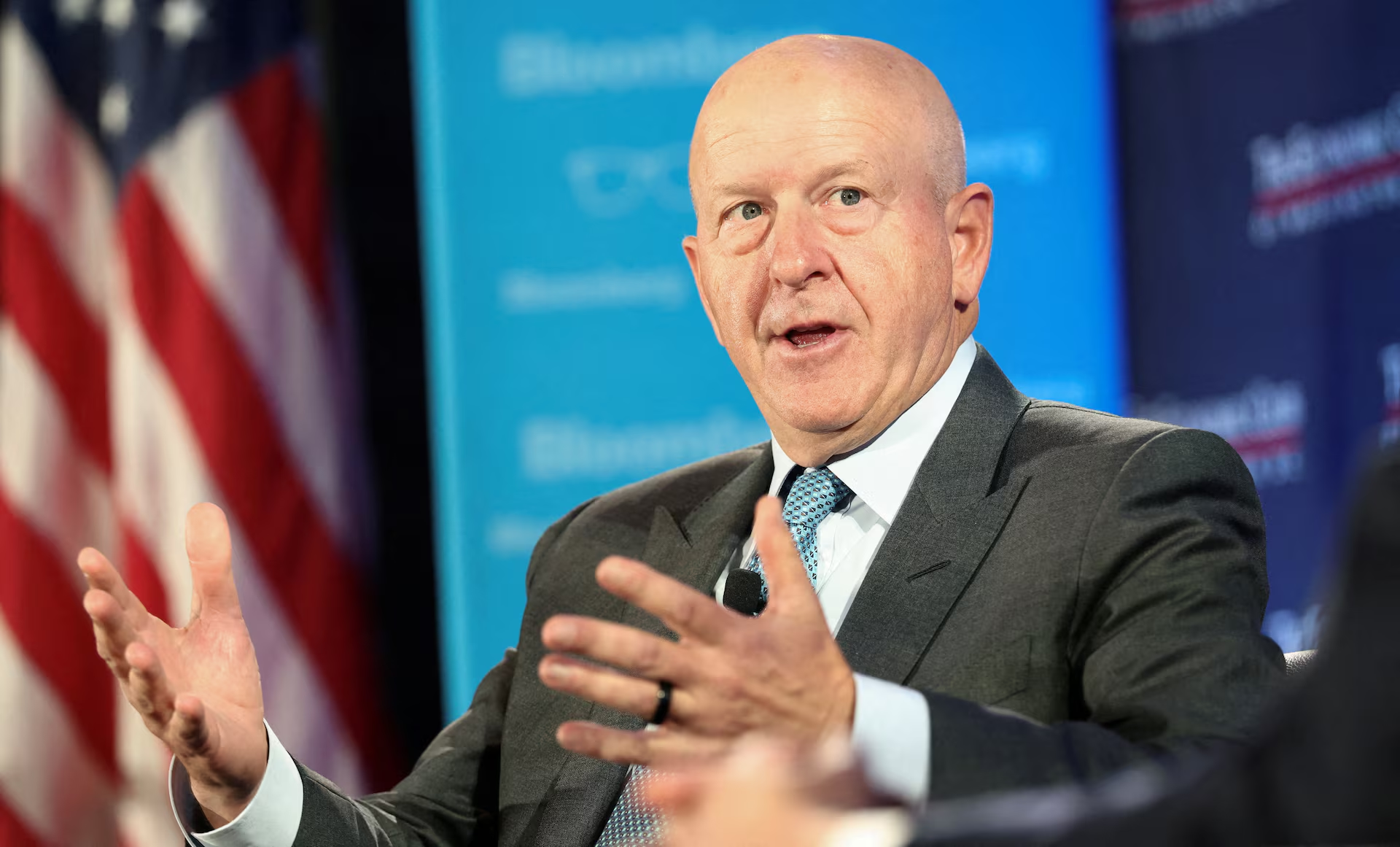
The head of Goldman Sachs has warned that recent market turbulence may represent a broader structural shift in the global financial system rather than short-term volatility.
Chief executive David Solomon said financial markets are entering a period of heightened uncertainty driven by geopolitical tensions, shifting monetary policies, and evolving economic dynamics. The comments come as investors worldwide navigate fluctuations in interest rates, inflation expectations, and global growth prospects.
Solomon’s remarks reflect growing concern among financial leaders that the post-pandemic economic environment is creating new challenges for investors, businesses, and policymakers alike.
Markets Adjusting to a New Economic Reality
Global financial markets have experienced significant volatility in recent months as investors reassess economic conditions following years of unusually loose monetary policy.
Central banks across major economies tightened interest rates aggressively to combat inflation after the pandemic-era surge in consumer prices. The resulting increase in borrowing costs has reshaped investment strategies and corporate financing conditions.
Market participants are now adjusting to an environment where capital is no longer as cheap or abundant as it was during the previous decade.
Solomon indicated that this transition could lead to periodic market disruptions as investors recalibrate expectations around growth, interest rates, and asset valuations.
The shift also highlights the increasing complexity of global financial markets, where economic policy decisions in one region can rapidly influence asset prices around the world.
Geopolitical Risks Add to Uncertainty
Geopolitical developments have also contributed to the heightened volatility in financial markets.
Conflicts, trade tensions, and strategic competition among major economies are increasingly influencing investor sentiment and capital flows.
Financial institutions must now factor geopolitical risk into their investment outlook in ways that were less prominent during earlier phases of globalization.
Solomon suggested that these geopolitical dynamics could continue to shape market behavior, particularly as governments prioritize economic security, supply chain resilience, and industrial policy.
Such developments can create both opportunities and risks for investors navigating global markets.
Corporate and Investor Strategies Evolving
In response to the changing environment, companies and investors are adapting their strategies.
Corporations are becoming more cautious about borrowing and capital spending as financing costs rise. At the same time, investors are reassessing portfolio allocations to account for higher interest rates and shifting economic conditions.
Financial institutions like Goldman Sachs are also adjusting their business strategies to align with the evolving market landscape.
Investment banks play a central role in advising companies on mergers and acquisitions, capital raising, and risk management—activities that are closely tied to broader economic conditions.
Periods of volatility can both challenge and create opportunities for such institutions, particularly in areas like trading and advisory services.
Implications for Global Markets
The current market environment reflects the interaction of several powerful forces shaping the global economy.
These include:
- Higher global interest rates
- Persistent inflation risks
- Geopolitical tensions
- Technological transformation
- Shifting supply chains
Together, these factors are reshaping how investors evaluate risk and return across asset classes.
Equity markets have experienced sharp swings as investors react to economic data and central bank signals. Bond markets, meanwhile, have also seen volatility as yields adjust to new expectations about inflation and policy rates.
Such conditions can lead to rapid capital movement between asset classes, amplifying market fluctuations.
Long-Term Financial System Transformation
Solomon suggested that the turbulence may ultimately reflect a deeper transformation of the global financial system.
Over the past decade, financial markets were shaped by historically low interest rates, abundant liquidity, and relatively stable geopolitical conditions.
The current environment appears markedly different.
Central banks are navigating the delicate balance between controlling inflation and sustaining economic growth, while governments are increasingly intervening in strategic sectors such as technology and energy.
This evolving landscape may lead to a more fragmented global economic order, with financial markets adjusting to new policy frameworks and geopolitical realities.
What Comes Next
For investors and financial institutions, the coming years may require greater adaptability and more sophisticated risk management strategies.
Market participants are likely to focus closely on signals from central banks, economic indicators, and geopolitical developments that could influence global capital flows.
Despite the challenges, periods of volatility can also create opportunities for investors able to navigate complex market dynamics.
Solomon’s warning highlights a broader message for global markets: the economic conditions that defined the previous decade may no longer apply.
Instead, investors are entering a new era characterized by higher uncertainty, shifting policy frameworks, and structural changes in the global financial system.