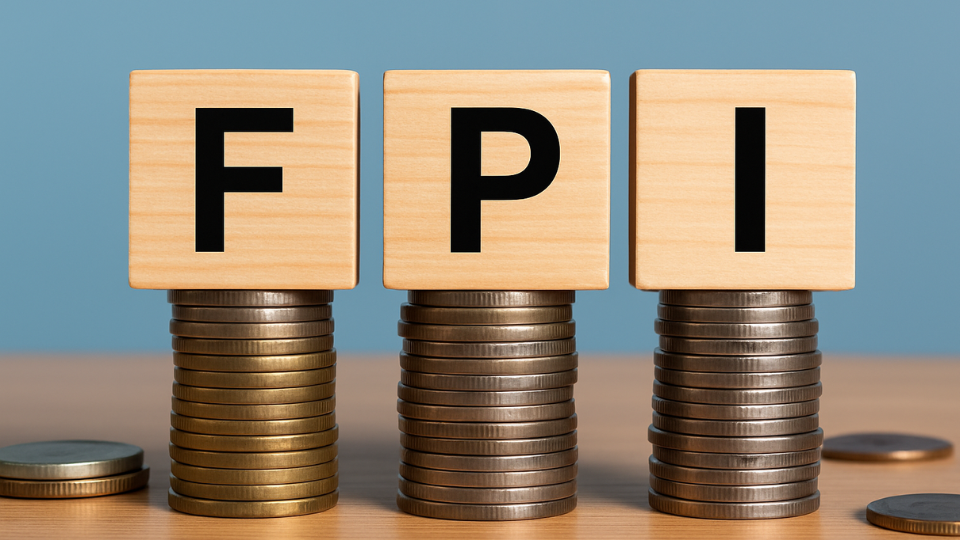
FPIs Turn Net Buyers: Indian Stock Market Sees ₹8,100 Crore Inflow After Trade Deal
Foreign investors have shifted their strategy on the Indian stock market. After selling for three months straight, overseas investors became net buyers in February. This change is largely due to the new interim trade deal between India and the US, despite mixed corporate earnings results for the December quarter.
This renewed interest triggered a sharp rally in major market indices. Last week, the Nifty 50 rose by 3.50% and the Sensex climbed 3.60%. Midcap and Smallcap stocks also benefited, with both indices surging nearly 4% so far this month.
FPI Inflows Reach ₹8,120 Crore in February
According to NSDL data, Foreign Portfolio Investors (FPIs) have poured ₹8,129 crore into Indian equities in February. This is a significant turnaround from previous months. FPIs had withdrawn ₹35,962 crore in January, ₹22,611 crore in December, and ₹3,765 crore in November as they moved money to other emerging markets.
Analysts believe the India-US interim trade deal is the primary driver of this shift. The agreement removes major economic uncertainties and brightens the outlook for Indian exports. By lowering tariffs, the deal makes Indian goods more competitive against other Asian exporters.
Key Factors Driving the Market Recovery
The US and India released an interim framework on Friday aimed at lowering tariffs, strengthening energy ties, and deepening economic cooperation. This deal helps both nations reshape global supply chains.
Beyond the trade deal, other factors are helping the Indian market:
- Slowdown in Global AI Trades: As the massive rally in AI stocks cools down elsewhere, investors are refocusing on India, Asia’s third-largest economy.
- Government Policy: While the Union Budget 2027 initially hurt sentiment with a hike in the Securities Transaction Tax (STT), other measures have provided support. High government spending (capex), a lower fiscal deficit target, and a commitment to reducing national debt have limited the initial market damage.
- Stronger Currency: The trade deal boosted the Indian rupee, which has strengthened by 1.3% against the US dollar in February so far.
How a Stronger Rupee Impacts Future Inflows
Dr. VK Vijayakumar, Chief Investment Strategist at Geojit Financial Services, noted that last week was a major turning point. While the market initially reacted poorly to tax changes in the Budget, it recovered quickly on the news of the US-India trade deal.
A key shift in sentiment came as the rupee recovered from a record low of 91.72 to 90.30 against the dollar. Although the rupee settled around 90.70 by February 6, experts expect it to stabilize and potentially move below 90 by the end of March 2026.
A stable and strengthening rupee typically encourages more foreign investment. However, experts note that much will still depend on how global trends, such as the AI trade, continue to develop.
Also Read : Oil Prices Fall as Easing Middle East Tensions Lower Supply Risks