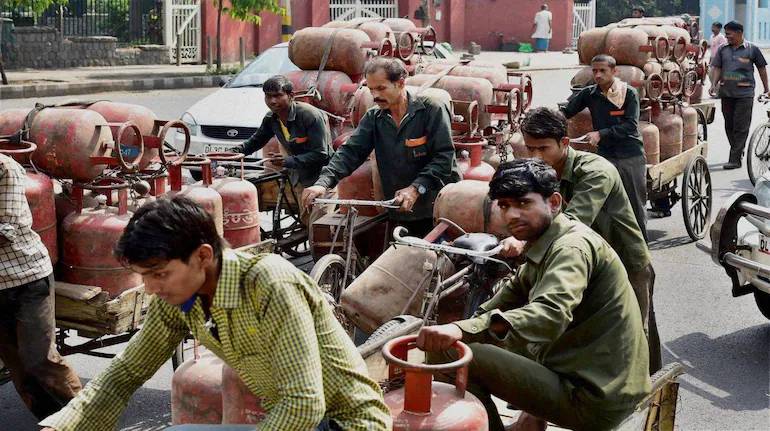
The price of a 14.2-kg domestic LPG cylinder has been increased by ₹60 across India, while the cost of 19-kg commercial cylinders has been raised by ₹115, according to updates from Indian Oil Corporation.
The price revision comes as geopolitical tensions in West Asia—particularly involving Iran—continue to push global energy prices higher. The increase took effect immediately, reflecting the growing pressure on India’s fuel supply chain and import costs.
For consumers and businesses alike, the revision signals how quickly global conflicts can ripple through domestic fuel markets in India.
New LPG prices across major cities
Following the latest revision, a 14.2-kg domestic LPG cylinder in Delhi now costs ₹913, up from ₹853 previously. Similar increases have been recorded across other major cities.
Revised prices include:
- Delhi: ₹913 per cylinder
- Mumbai: about ₹912.50
- Kolkata: around ₹930
- Chennai: about ₹928.50
The increase marks the second price adjustment in less than a year, highlighting the volatility of global energy markets.
Commercial LPG cylinders used by hotels, restaurants and small enterprises have seen a sharper jump. The 19-kg commercial cylinder is now ₹115 costlier, raising operating costs for sectors heavily dependent on cooking gas.
Industry analysts say the commercial price hike could gradually filter into food prices, catering costs and hospitality services.
Global conflict driving energy costs
The price revision is linked directly to the ongoing geopolitical crisis in West Asia, where escalating tensions have disrupted energy markets.
The conflict has pushed up global crude oil and gas prices while raising concerns about supply disruptions in critical shipping routes.
Energy markets are particularly sensitive to developments in the region because the Middle East remains one of the world’s largest exporters of hydrocarbons.
India, which imports a majority of its energy requirements, is especially exposed to such fluctuations.
Analysts warn that prolonged instability in the region could sustain higher energy prices, forcing domestic fuel retailers to periodically adjust LPG and other fuel prices.
India’s heavy dependence on LPG imports
India is one of the largest consumers and importers of liquefied petroleum gas (LPG) globally.
A large portion of LPG used for cooking is imported, making the country vulnerable to global supply shocks.
Government data indicates that LPG consumption in India has expanded sharply over the past decade due to welfare schemes such as the Pradhan Mantri Ujjwala Yojana, which expanded access to cooking gas among low-income households.
As a result, India’s LPG demand now runs into tens of millions of tonnes annually, increasing the country’s exposure to international price fluctuations.
Industry experts estimate that as much as 85% of LPG flows into India depend on imports or international pricing benchmarks, making domestic price stability difficult during global crises.
Government measures to secure supply
In response to the escalating conflict and fears of supply disruptions, the government has already taken emergency steps to secure LPG availability.
Officials have instructed refiners to boost domestic LPG production and prioritize cooking gas supply rather than diverting propane and butane to petrochemical uses.
These steps were taken under provisions of the Essential Commodities Act 1955, which allows the government to direct industries to increase production during supply disruptions.
Authorities have also assured consumers that there is no immediate shortage of LPG, even though prices have increased.
Energy policymakers are simultaneously exploring alternative import sources to reduce the risk of supply interruptions if the West Asia conflict intensifies.
Economic impact on households and businesses
The LPG price increase comes at a time when many households are already grappling with rising living costs.
For middle-class and low-income families, cooking gas is a significant monthly expense, meaning even a ₹60 increase per cylinder can affect household budgets.
The impact may be even sharper for:
- small restaurants
- street food vendors
- catering businesses
- bakeries and commercial kitchens
These businesses rely heavily on commercial LPG cylinders, and the ₹115 increase could squeeze profit margins.
Economists note that higher energy costs can indirectly contribute to broader inflation by raising food and service prices.
However, policymakers may attempt to cushion the impact through subsidies or fiscal measures if global fuel prices remain elevated for an extended period.
Outlook: more volatility possible
Energy analysts say the LPG price hike may not be the last if tensions in West Asia persist.
Much will depend on how the geopolitical situation evolves and whether oil and gas shipping routes remain uninterrupted.
If global crude prices continue to climb, additional adjustments to domestic fuel prices—including petrol, diesel, and LPG—could follow.
For now, the government appears focused on two priorities:
- ensuring uninterrupted LPG supply across the country
- managing inflationary pressure on consumers
The latest revision underscores how global geopolitical shocks increasingly influence India’s domestic energy pricing, particularly in sectors tied closely to imported fuels.