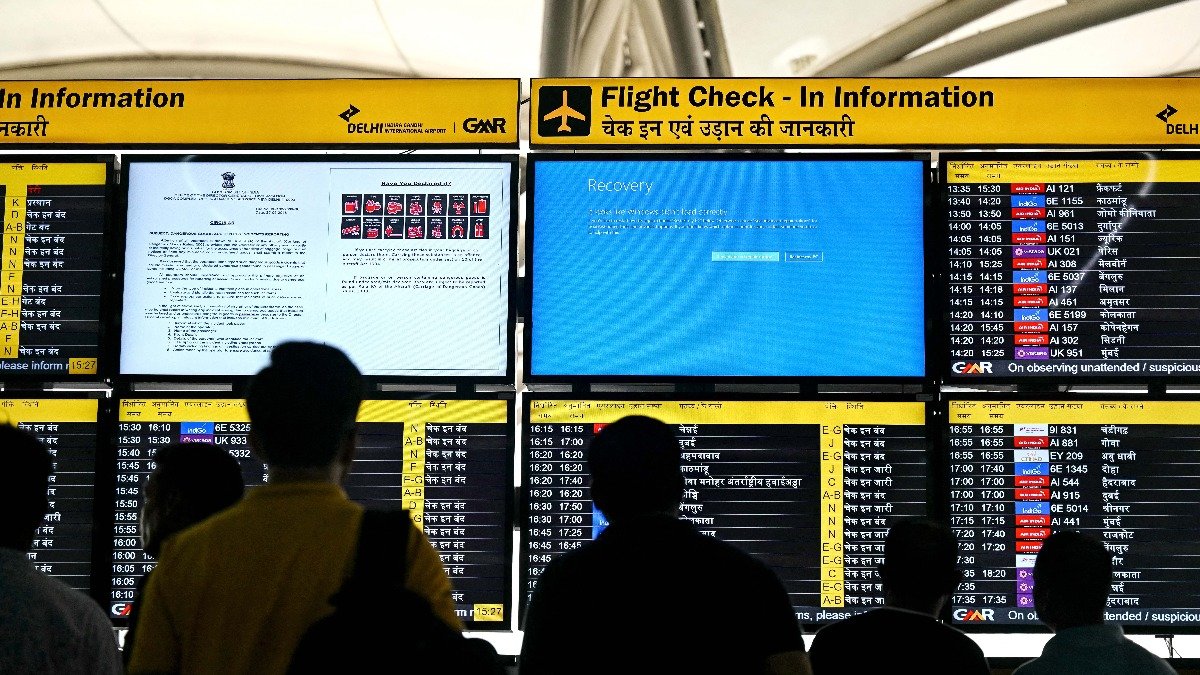
Flight operations at Delhi’s Indira Gandhi International Airport were hit by significant delays, disrupting departures and arrivals and stranding passengers during peak travel hours. The congestion triggered airline advisories and forced schedule adjustments across domestic and international routes.
The disruption at one of India’s busiest aviation hubs underscores the fragility of airport operations amid weather variability, heavy traffic, and airspace constraints.
Operations at Indira Gandhi International Airport were impacted as multiple flights reported delays extending beyond normal turnaround windows. Passengers reported extended waiting times inside terminals, with some departures pushed back by over an hour.
Airport authorities and airlines cited operational challenges, including runway management pressures and congestion linked to high traffic volumes. Delhi airport handles more than 1,300 flight movements daily, making even minor disruptions capable of cascading across schedules.
Airlines, including major domestic carriers, issued advisories asking passengers to check flight status before leaving for the airport. Ground handling teams were seen managing backlog pressure while aircraft queued on taxiways awaiting clearance.
Congestion at a critical aviation hub
Delhi serves as a primary hub for several Indian carriers and connects key international routes. Any delay at IGI typically reverberates through the broader aviation network.
With Delhi positioned as a transit gateway for northern and central India, delayed departures often affect connecting passengers onward to tier-2 cities and international destinations.
Operational disruptions at IGI also tend to spill over into:
- Crew duty hour limitations
- Aircraft rotation schedules
- Baggage handling timelines
- Air traffic sequencing
Such ripple effects can extend delays across the day’s schedule, even after initial congestion is cleared.
Impact on passengers and airlines
For passengers, delays translate into missed connections, increased travel time, and added uncertainty. Business travelers face scheduling disruptions, while leisure passengers may incur additional accommodation or rebooking costs.
Airlines bear financial implications in the form of:
- Higher fuel burn from extended taxi times
- Compensation and re-accommodation costs
- Crew overtime payments
- Operational inefficiencies
During high traffic seasons, airlines operate on tight slot allocations. Even short runway bottlenecks can create systemic stress.
Aviation sector under pressure
India’s aviation sector has been expanding rapidly, with passenger traffic rebounding strongly post-pandemic. However, infrastructure expansion often struggles to keep pace with demand growth.
The Directorate General of Civil Aviation (DGCA) and airport operators have periodically emphasized the need for:
- Enhanced air traffic management systems
- Additional runway optimization
- Improved coordination between airlines and ground services
Delhi airport has multiple runways, but operational constraints — including weather variability and visibility conditions — can reduce usable capacity during certain periods.
Broader implications
While temporary disruptions are not uncommon at major global hubs, repeated congestion events raise questions about long-term capacity adequacy. India’s aviation market is projected to become the world’s third-largest by passenger traffic within this decade.
Sustained operational stress at primary hubs like Delhi could:
- Increase turnaround times structurally
- Raise airline operating costs
- Impact punctuality metrics
- Affect passenger experience ratings
Infrastructure modernization and digital air traffic systems remain central to mitigating such risks.
What happens next
Airport authorities indicated that efforts were underway to restore normalcy, with flight movements gradually stabilizing as congestion eased. However, downstream delays may persist through subsequent rotations.
Passengers have been advised to monitor airline updates and allow additional time for airport formalities.
The incident highlights the growing strain on India’s busiest aviation corridors and reinforces the importance of infrastructure resilience in supporting expanding air travel demand.