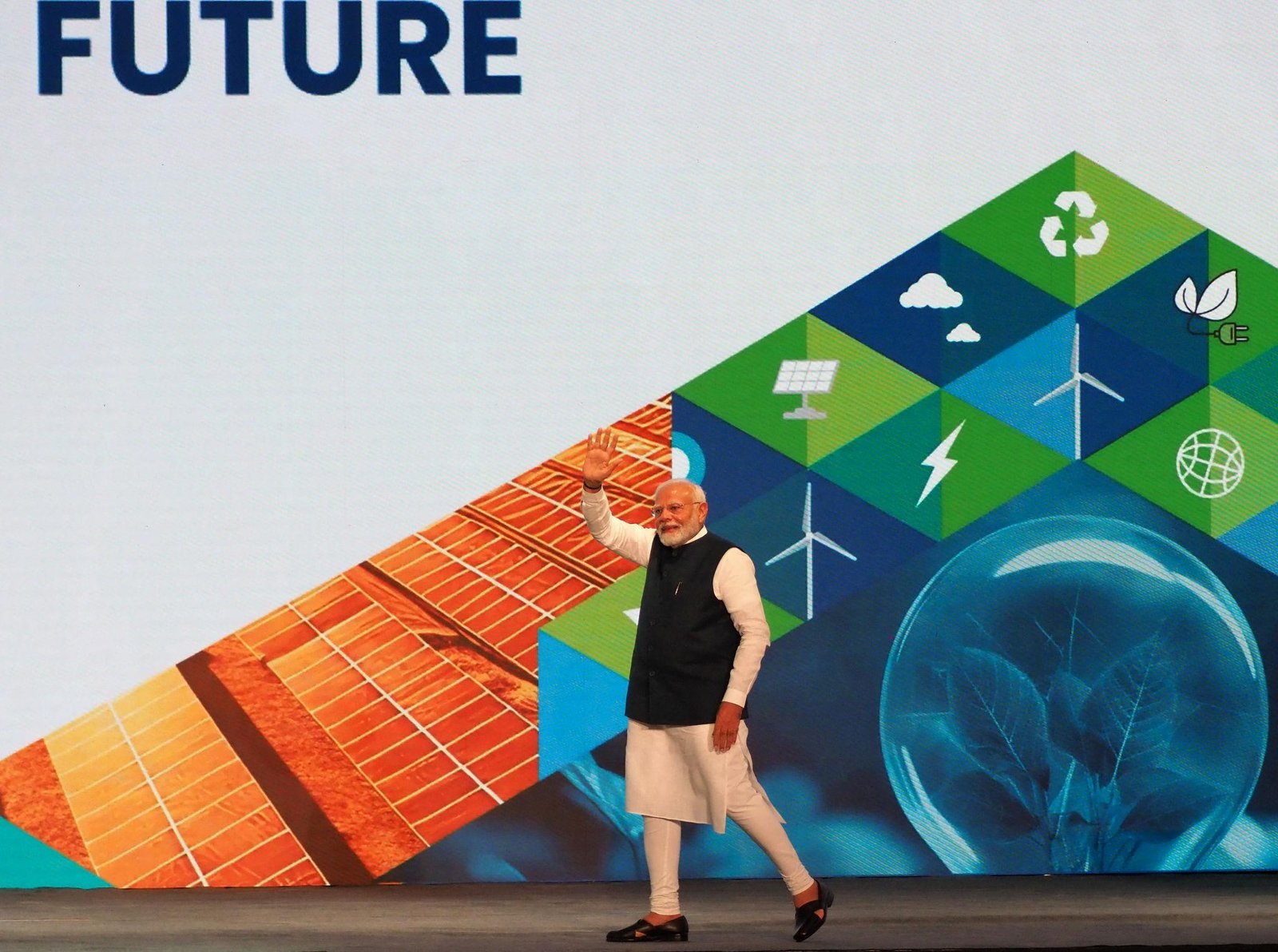
Prime Minister Narendra Modi has said that investments in clean energy are not only critical for combating climate change but are also becoming a powerful engine for economic growth and employment generation in India.
Speaking at an international energy forum, Modi emphasized that the transition to renewable power is creating large-scale opportunities in manufacturing, infrastructure development, and technology innovation. The Prime Minister noted that India’s push toward solar, wind, and green hydrogen is rapidly transforming the country into one of the world’s most significant clean energy markets.
The remarks come as India accelerates investments in renewable infrastructure while balancing the energy demands of a fast-growing economy.
Renewable Energy Expansion Gains Momentum
India has emerged as one of the fastest-growing renewable energy markets globally, with rapid expansion in solar and wind installations across several states.
The government has set an ambitious target of installing 500 gigawatts of non-fossil fuel power capacity by 2030, positioning the country as a major player in the global energy transition.
According to official estimates, India’s renewable capacity has already crossed 180 gigawatts, including solar, wind, hydro, and bioenergy sources. Large-scale solar parks, offshore wind projects, and grid modernization initiatives are currently underway to support further expansion.
The renewable sector is also driving domestic manufacturing growth, particularly in solar modules, battery storage technologies, and green hydrogen production.
India’s energy transition strategy has been reinforced by initiatives such as the International Solar Alliance, a multilateral platform launched by India to promote solar deployment across sun-rich nations.
The alliance now includes dozens of member countries and aims to mobilize billions of dollars in solar investments globally.
Clean Energy as an Economic Growth Driver
Beyond environmental goals, Modi highlighted the economic benefits of renewable investments.
The clean energy ecosystem is generating employment across multiple sectors including:
- Solar and wind infrastructure construction
- Electrical equipment manufacturing
- Battery storage technologies
- Green hydrogen production
- Grid management and digital energy systems
Industry analysts estimate that India’s energy transition could generate millions of jobs over the next decade, particularly in engineering, project development, and manufacturing.
The government has also introduced policy incentives to attract private capital into renewable projects.
Programs such as production-linked incentives for solar manufacturing and financial support for green hydrogen projects are aimed at strengthening domestic supply chains and reducing dependence on imported energy technologies.
Energy Security and Climate Commitments
India’s clean energy push is closely linked to its broader energy security strategy.
The country currently imports more than 80% of its crude oil needs, making diversification toward renewable energy an economic as well as environmental priority.
Reducing fossil fuel dependence can help shield the economy from global oil price volatility while strengthening long-term energy independence.
India has also committed to achieving net-zero carbon emissions by 2070, a goal that requires massive investment in renewable generation, electric mobility, and energy storage systems.
International financial institutions and private investors have shown increasing interest in India’s energy transition, viewing it as one of the world’s largest emerging markets for clean infrastructure.
Global Collaboration on Energy Transition
India has been actively promoting international cooperation in renewable energy development.
The country has partnered with multiple global institutions to finance green projects and accelerate technology transfer.
Organizations such as the International Energy Agency have repeatedly highlighted India’s critical role in shaping the global energy transition due to its growing electricity demand and expanding renewable capacity.
As developing economies seek pathways to balance growth with sustainability, India’s approach is being closely watched by policymakers worldwide.
Challenges in the Energy Transition
Despite strong momentum, India’s clean energy transition faces several structural challenges.
One of the most significant issues is grid infrastructure. Renewable power sources such as solar and wind are intermittent, requiring large-scale storage solutions and modernized transmission networks to maintain stable electricity supply.
Land acquisition, financing constraints, and supply chain dependencies—particularly for solar components—remain additional hurdles.
Furthermore, balancing the transition while ensuring affordable power for industry and households continues to be a complex policy challenge.
Coal still accounts for a substantial share of India’s electricity generation, and reducing that dependence will require sustained investment in alternative energy systems.
What Comes Next
India’s renewable energy sector is expected to see hundreds of billions of dollars in investment over the next decade, as government policies and global climate commitments drive large-scale infrastructure development.
Key areas likely to see rapid growth include:
- Solar manufacturing and deployment
- Offshore wind energy projects
- Green hydrogen production
- Battery storage systems
- Electric mobility infrastructure
As global energy markets undergo structural change, India’s strategy reflects a broader shift among emerging economies toward cleaner, more resilient energy systems.
For policymakers and investors alike, the country’s expanding renewable ecosystem represents both a climate solution and a major economic opportunity.