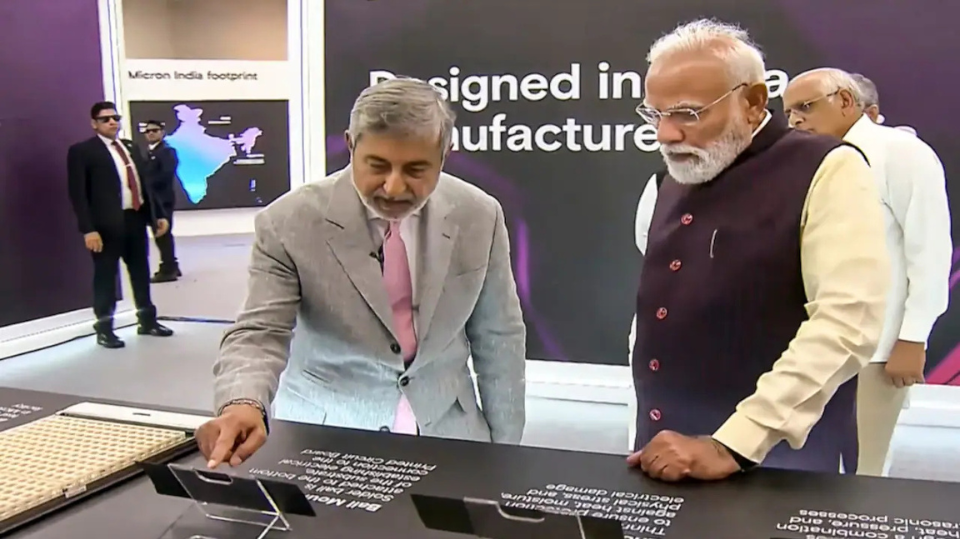
PM Modi Inaugurates Micron’s Semiconductor Facility in Gujarat
Prime Minister Narendra Modi inaugurated Micron Technology’s new semiconductor plant in Gujarat on Saturday. This event marks a historic milestone for India’s semiconductor manufacturing industry.
The US-based company has invested ₹22,516 crore in the facility, which is located in Sanand. This project began nearly three years ago with the signing of a Memorandum of Understanding (MoU).
Strengthening India US Tech Partnerships
During the inauguration, Prime Minister Modi highlighted that the new plant reflects the deep partnership between India and the United States.
“If oil was the regulator of the last century, microchips will be the regulator of this century,” the Prime Minister stated. He emphasized that the cooperation between the world’s two largest democracies is essential for securing global supply chains in technologies like AI and semiconductors.
What the Sanand Facility Produces
The facility focuses on ATMP (Assembly, Testing, Marking, and Packaging). It will manufacture high-tech storage and memory products, including:
- SSD (Solid State Drive): Used for data storage.
- DRAM (Dynamic Random Access Memory): A common type of RAM for computers and servers.
- NAND Flash Memory: Used in smartphones, data centers, and portable electronics.
The plant receives semiconductor wafers from Micron’s global network and converts them into finished products for customers worldwide.
Boosting Jobs and Infrastructure
The Sanand plant currently employs 2,000 people and is expected to create 5,000 direct jobs over time. Micron noted that the facility provides opportunities for skilled workers from all sections of society, including specially-abled (Divyang) citizens who serve as operators and technicians.
Once it reaches full capacity, the site will feature 500,000 square feet of “cleanroom” space. This will make it one of the largest facilities of its kind in the world.
How the ATMP Process Works
As an Assembly, Testing, Marking, and Packaging facility, the plant follows a specific four-step process:
- Assembly: Chips are put together into functional units.
- Testing: Every chip is checked for speed, memory capacity, and performance.
- Marking: Essential technical details are printed on the chips.
- Packaging: The finished products are packaged for shipping to both Indian and international markets.
Also Read : Zydus Lifesciences to Launch Generic Leprosy and Anti Parasitic Tablets in the US