Strategic Waterway at the Centre of Global Trade
The Strait of Hormuz is widely regarded as one of the most important maritime chokepoints in the world.
Roughly 20% of global oil supply and a substantial share of liquefied natural gas shipments pass through the narrow corridor connecting the Persian Gulf with the Arabian Sea.
The ongoing geopolitical confrontation in the region has triggered fears of shipping disruptions, insurance cost spikes, and energy price volatility.
Recent military tensions linked to the broader Iran war have already caused dramatic reductions in tanker traffic and temporary halts in commercial shipping, highlighting the vulnerability of the route.
However, while energy markets are particularly sensitive to the strait’s stability, experts say the impact on India’s digital infrastructure plans may be more limited.
ISM 2.0 and India’s Expanding Digital Backbone
India’s Internet Service Management (ISM) 2.0 programme is part of a broader push to strengthen the country’s digital infrastructure.
The initiative aims to expand internet capacity, improve international connectivity, and build greater resilience into India’s digital ecosystem as data traffic continues to surge.
India’s digital economy has been expanding rapidly, with hundreds of millions of users relying on high-speed connectivity for services ranging from digital payments and e-commerce to cloud computing and enterprise software.
The next phase of infrastructure upgrades under ISM 2.0 is expected to support:
- Higher international bandwidth capacity
- Improved redundancy for submarine cable routes
- Stronger network resilience against disruptions
Given the scale of India’s digital traffic growth, such investments are considered essential to support the country’s expanding technology sector.
Submarine Cable Risks Remain Manageable
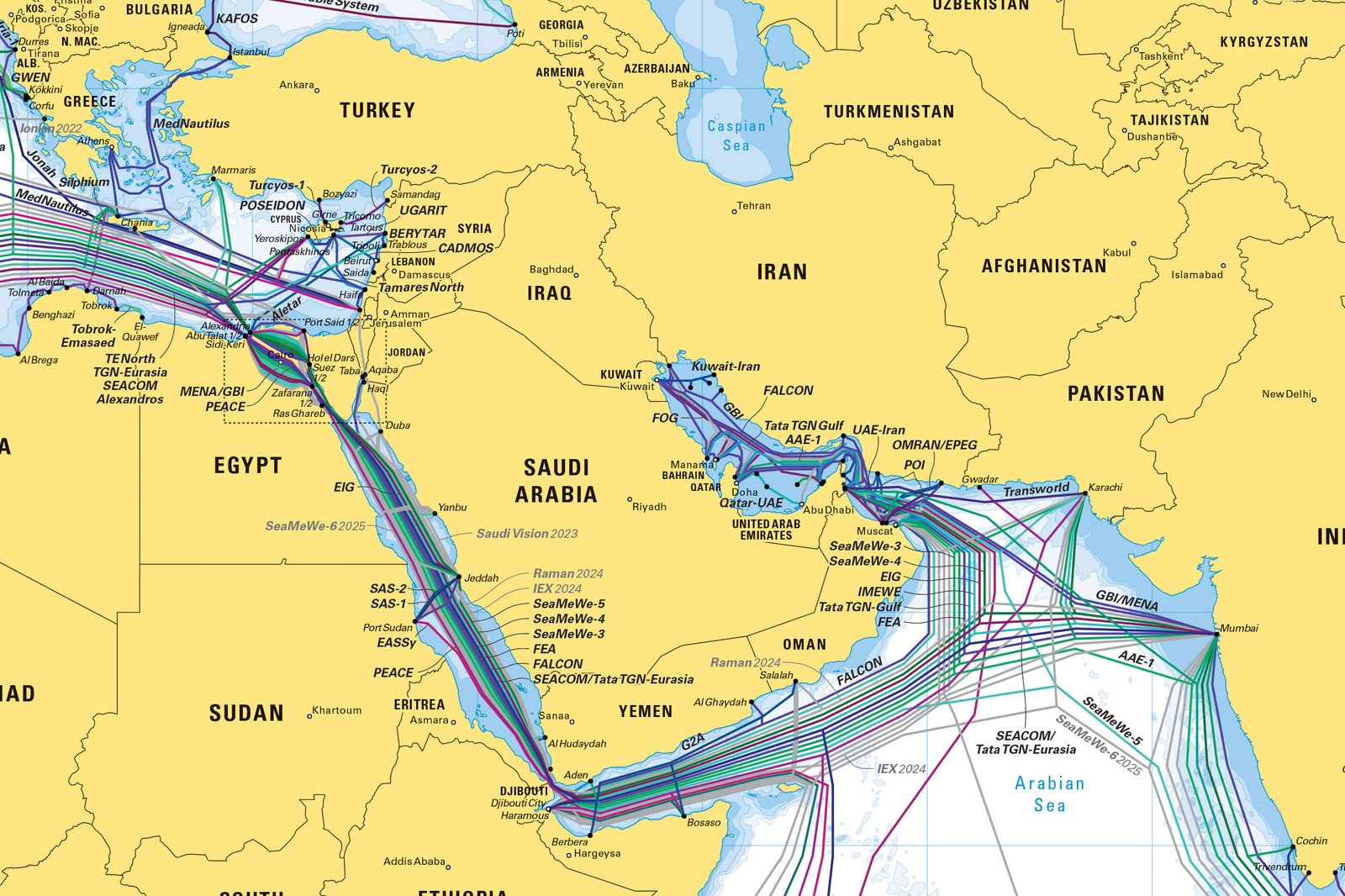
The Strait of Hormuz region is not only an energy corridor but also a major hub for undersea communication cables linking Asia with Europe and the Middle East.
A significant share of India’s westbound internet traffic passes through submarine cables routed near the Gulf region.
This concentration means geopolitical instability could theoretically disrupt data flows if cables are damaged or repair operations become difficult.
However, network infrastructure specialists point out that global submarine cable systems are designed with redundancy and multiple routing pathways, allowing traffic to be redirected in the event of localized disruptions.
Even if certain cable routes face temporary interruptions, internet traffic can often be rerouted through alternative systems, minimizing large-scale outages.
Because of this built-in resilience, experts believe that ISM 2.0 implementation timelines are unlikely to be significantly affected by current regional tensions.
India’s Digital Economy at a Critical Stage
The stability of international data infrastructure has become increasingly important as India’s digital economy accelerates.
The country now hosts one of the world’s largest internet user bases, with rapidly rising data consumption driven by streaming, fintech, artificial intelligence applications, and enterprise cloud adoption.
Major global technology firms are investing billions of dollars in data centres, cloud infrastructure, and submarine cable systems connecting India to international networks.
Projects such as ISM 2.0 aim to strengthen these networks by improving connectivity reliability and ensuring that large volumes of cross-border data traffic can flow without bottlenecks.
Given the strategic importance of digital infrastructure, policymakers and telecom operators are closely monitoring geopolitical developments that could affect global network routes.
Energy Shock Still a Major Risk
While ISM 2.0 itself may not face direct delays, the wider geopolitical crisis still poses indirect economic risks for India.
The Strait of Hormuz handles an enormous share of global energy shipments, making it a key vulnerability for oil-importing economies.
India imports the majority of its crude oil, and analysts estimate that nearly half of the country’s crude shipments transit the Hormuz corridor, making it highly sensitive to disruptions.
If the conflict escalates further, potential consequences could include:
- Higher global crude oil prices
- Increased shipping insurance costs
- Currency volatility
- Inflationary pressures
Such macroeconomic impacts could indirectly affect technology investments and telecom sector spending.
Building Resilience Against Geopolitical Risks
The current tensions highlight a broader challenge facing the global digital economy: the vulnerability of critical infrastructure to geopolitical conflicts.
Submarine cables, energy pipelines, and shipping routes often converge in narrow maritime corridors such as the Persian Gulf.
As India’s digital economy continues expanding toward multi-trillion-dollar scale, strengthening infrastructure resilience has become a strategic priority.
Telecom companies and infrastructure providers are therefore focusing on:
- Diversifying international cable routes
- Building additional landing stations
- Increasing domestic data capacity
- Strengthening cybersecurity and infrastructure protection
These efforts are designed to ensure that India’s digital ecosystem remains stable even amid geopolitical disruptions.
Outlook: Infrastructure Plans Continue Despite Conflict
For now, industry experts believe that India’s ISM 2.0 rollout remains on track despite escalating tensions in West Asia.
While the conflict has rattled energy markets and shipping lanes, the digital infrastructure underpinning India’s internet connectivity appears sufficiently diversified to withstand short-term disruptions.
However, policymakers and telecom operators remain cautious.
If instability in the region escalates into prolonged maritime conflict or damages undersea cable networks, the risk profile could change rapidly.
Until then, India’s digital expansion plans—including the next phase of its internet infrastructure upgrades—are expected to continue largely as scheduled.