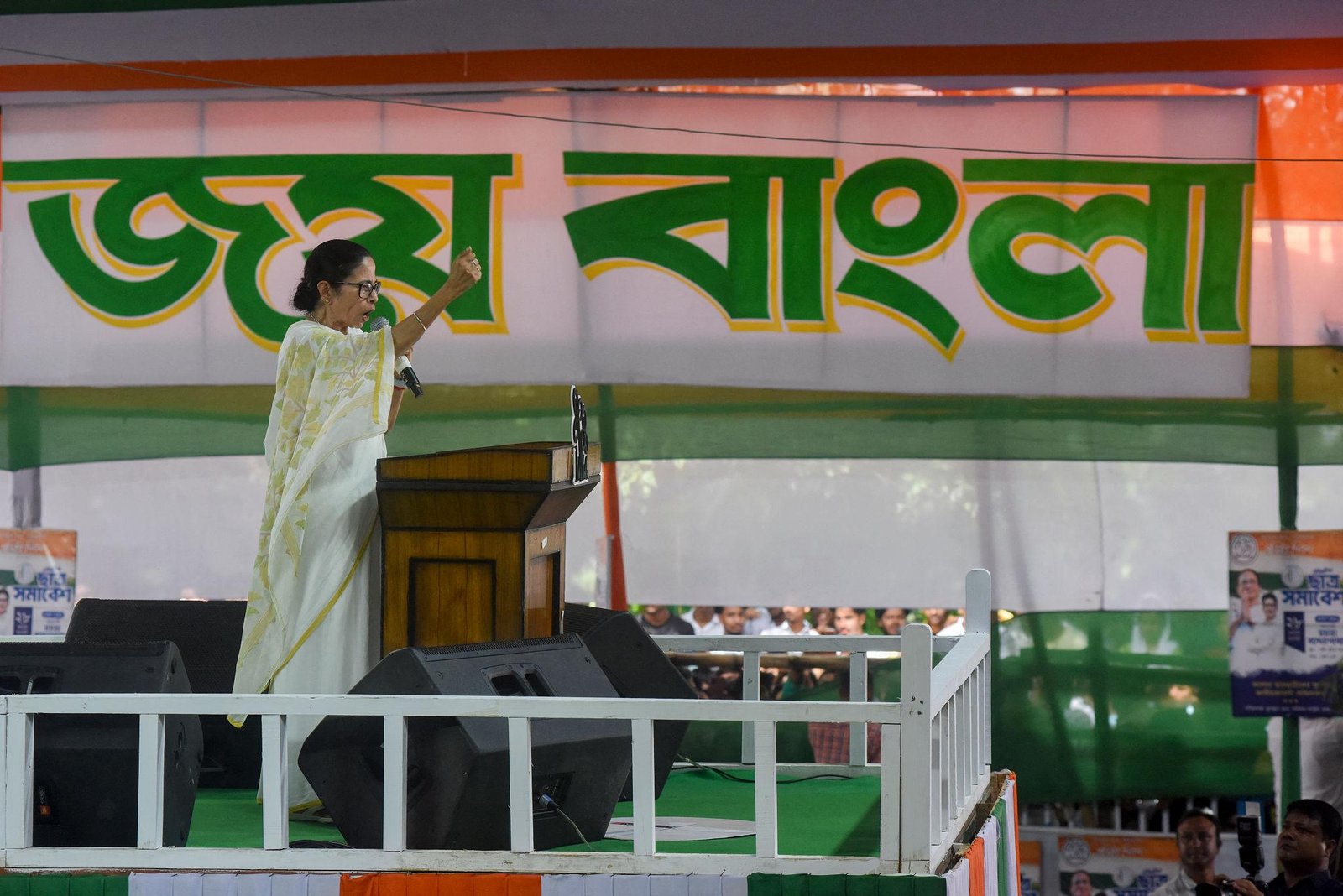
The sudden resignation of C. V. Ananda Bose as governor of West Bengal has triggered a political storm after Chief Minister Mamata Banerjee suggested that the decision may have been influenced by pressure from the central government.
Speaking to reporters, Banerjee questioned the circumstances surrounding the resignation and indirectly pointed toward the influence of Union Home Minister Amit Shah. While she did not provide direct evidence, the chief minister indicated that the governor’s departure appeared unusual given the timing.
The development comes at a politically sensitive moment, with West Bengal preparing for the next assembly election cycle and tensions between the state government and the Centre already running high.
Governor’s Resignation Sparks Political Debate
The resignation of Bose has drawn significant attention in political circles because governors typically serve fixed terms and rarely step down abruptly unless appointed to another constitutional position or facing personal circumstances.
During his tenure, Bose frequently found himself at the center of disagreements between the Raj Bhavan and the state government, particularly over administrative matters, legislative procedures, and governance issues.
Governors in India act as the constitutional heads of states and are appointed by the President on the advice of the central government. While the role is intended to be largely ceremonial, political friction between governors and opposition-ruled state governments has become increasingly common in recent years.
The departure of Bose has therefore raised questions about whether the move is part of a broader political recalibration ahead of the elections.
Mamata Banerjee Raises Questions
Addressing the media, Banerjee suggested that the resignation may not have been entirely voluntary. Without directly accusing the central government, she hinted that pressure from New Delhi could have influenced the decision.
The chief minister stated that the timing of the resignation, so close to a major electoral cycle, raises concerns about political motivations behind the move.
Her comments reflect long-standing tensions between the state government and the governor’s office. Over the past few years, the two sides have clashed on several occasions over issues such as university appointments, legislative approvals, and administrative decisions.
Banerjee has repeatedly accused the governor’s office of acting as an extension of the central government, a claim frequently rejected by leaders of the ruling party at the national level.
Centre Yet to Respond to Allegations
As of now, the central government has not issued a formal response to Banerjee’s remarks. Officials have also not clarified the precise reasons behind Bose’s resignation.
Political analysts note that resignations of governors often remain opaque because the appointment and removal process falls under the executive authority of the Union government.
If a replacement governor is appointed soon, it could further shape the political narrative in the state ahead of elections.
The development is particularly sensitive given the history of Centre–state tensions in West Bengal, where the ruling party and the national government have frequently clashed over governance and political issues.
Role of Governors in Political Flashpoints
The governor’s office has increasingly become a focal point of political controversy in several Indian states governed by opposition parties.
Constitutionally, governors are responsible for ensuring that state governments function according to the law and may intervene in specific circumstances, such as recommending President’s Rule or seeking clarification on legislative matters.
However, critics often argue that governors appointed by the central government can sometimes become political actors rather than neutral constitutional figures.
Supporters of the system, on the other hand, maintain that the governor plays a critical role in maintaining constitutional balance between state governments and the Union.
The situation in West Bengal has mirrored similar tensions in other states, where disagreements between elected governments and appointed governors have periodically escalated into public disputes.
Election Season Heightens Political Sensitivity
With the next assembly election approaching, political narratives in West Bengal are already intensifying. Any major administrative change — particularly involving the governor’s office — is likely to attract scrutiny from both ruling and opposition parties.
The Trinamool Congress government has consistently framed its political messaging around federal autonomy and resistance to perceived interference from the Centre.
Meanwhile, the national opposition has accused the state government of politicizing administrative institutions.
Against this backdrop, the resignation of Bose adds another layer of uncertainty to an already charged political environment.
What Happens Next
Attention now turns to the appointment of the next governor for West Bengal. The decision will be made by the President of India based on the recommendation of the central government.
Political observers will closely watch whether the successor adopts a conciliatory approach toward the state government or continues the confrontational dynamic that characterized previous interactions between Raj Bhavan and the state administration.
For now, Bose’s departure has opened a new chapter in the evolving political narrative of West Bengal — one that could influence the tone of the upcoming election campaign.