

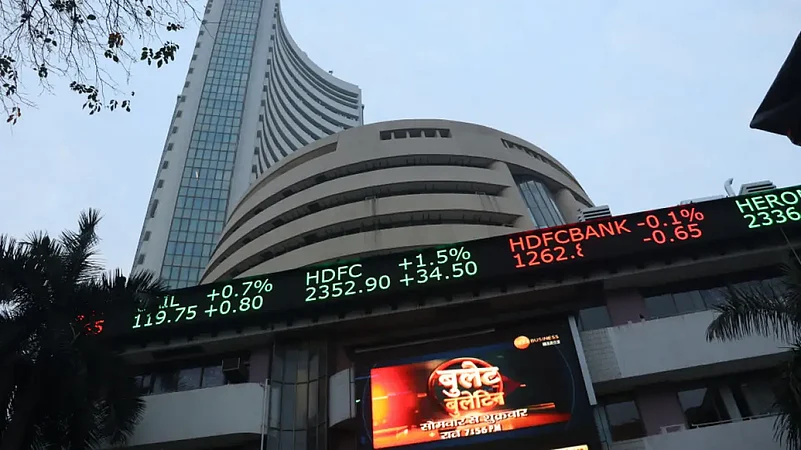
Indian equity markets staged a rebound after a period of volatility, with benchmark indices recovering as investors took advantage of lower valuations and improved sentiment in select sectors.
The recovery was reflected in gains across both the BSE Sensex and the Nifty 50, which had earlier faced pressure due to global geopolitical developments and rising crude oil prices.
Market participants said the rebound was driven by bargain hunting, easing global risk sentiment, and selective buying in heavyweight stocks.
Banking and Financial Stocks Support Market Recovery
One of the key drivers behind the market rebound was renewed buying interest in banking and financial stocks.
Large lenders such as HDFC Bank and ICICI Bank saw improved investor interest as traders moved back into fundamentally strong companies following the recent correction.
Banking stocks typically carry significant weight in benchmark indices, meaning even modest gains in these companies can support broader market recovery.
Investors often view large banks as relatively stable investments during periods of market volatility.
IT and Technology Stocks Stabilize
Technology stocks also helped support the rebound, as global demand for digital services and outsourcing remains resilient.
Companies such as Infosys and Tata Consultancy Services saw buying interest as investors reassessed valuations following recent declines.
The IT sector is closely linked to global economic conditions, particularly demand from the United States and Europe, where many Indian technology firms generate a large share of their revenue.
A stable outlook for global technology spending has helped maintain confidence in the sector.
Oil Prices and Global Events Remain Key Risks
Despite the rebound, market participants remain cautious due to ongoing global uncertainties.
Rising crude oil prices triggered by geopolitical tensions in the Middle East continue to pose risks for emerging markets such as India, which rely heavily on energy imports.
Higher oil prices can contribute to inflation and pressure corporate margins, making investors sensitive to developments in energy markets.
Currency fluctuations and foreign capital flows also remain important factors influencing Indian equity markets.
Investor Sentiment Improving
The recovery highlights a common pattern in financial markets where sharp declines are often followed by buying from investors who see opportunities in fundamentally strong stocks.
Domestic institutional investors have remained active participants in the market, helping offset fluctuations in foreign investor flows.
India’s economic fundamentals—including strong GDP growth projections, expanding domestic consumption, and increasing infrastructure investment—continue to support long-term investor confidence.
What Happens Next
Market analysts say the direction of Indian equities in the near term will depend on several global and domestic factors.
These include:
- Crude oil price movements
- Geopolitical developments
- Global interest rate trends
- Foreign institutional investor activity
If global conditions stabilize and commodity prices moderate, Indian equities could maintain their recovery.
However, persistent geopolitical tensions or sustained spikes in energy prices could trigger renewed volatility.
For investors, the latest rebound demonstrates the resilience of India’s equity markets while also highlighting the importance of monitoring global macroeconomic developments that influence investor sentiment.


