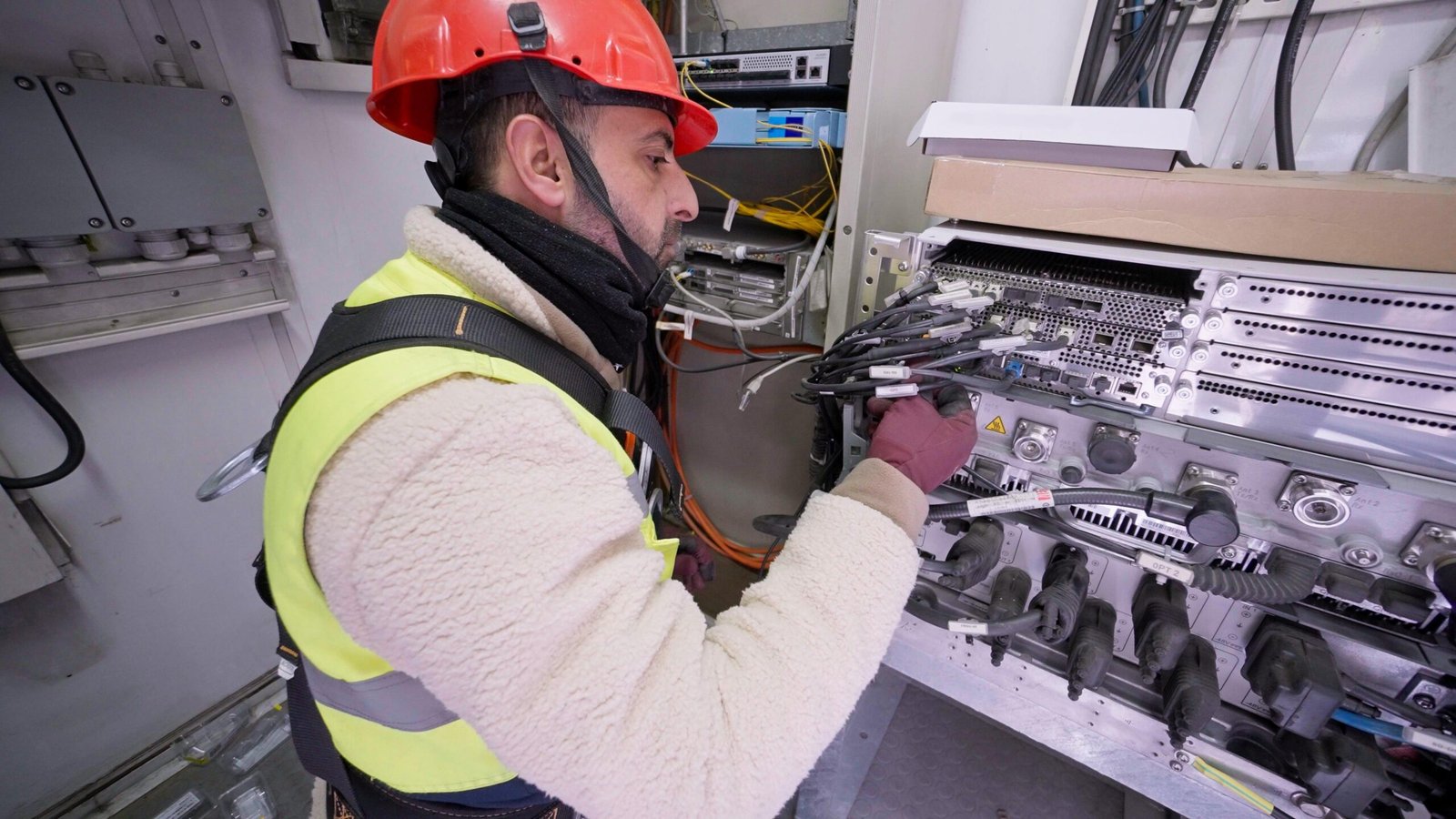
Chinese telecommunications equipment manufacturer Huawei has said it has connected around 170 million users globally through its advanced networking infrastructure, underscoring the company’s continued expansion in telecommunications technology despite ongoing geopolitical scrutiny.
The announcement reflects Huawei’s efforts to strengthen its presence in global digital infrastructure markets as governments and telecom operators accelerate investment in next-generation connectivity, including 5G networks and cloud-based telecom platforms.
The company said its technologies are supporting large-scale connectivity projects across multiple countries, helping telecom operators expand high-speed data access and support rapidly growing digital services.
Rapid Expansion in Global Telecom Networks
Huawei said its networking solutions are now being used by telecom providers in several regions, enabling connectivity for hundreds of millions of consumers and businesses.
The company’s infrastructure portfolio includes:
- 5G network equipment
- Cloud networking platforms
- Data center infrastructure
- Fiber-optic connectivity systems
Telecom operators rely on these technologies to support increasing data traffic driven by smartphone usage, video streaming, and enterprise cloud services.
As global demand for high-speed internet continues to rise, telecom infrastructure providers have become central to digital economy development.
Industry analysts say Huawei remains one of the world’s largest suppliers of telecom equipment despite restrictions imposed by several Western governments.
Global Digital Infrastructure Race
The announcement highlights the growing competition among global telecom companies to build the infrastructure supporting the next generation of internet services.
High-speed networks are essential for enabling technologies such as artificial intelligence, autonomous vehicles, smart cities, and industrial automation.
Governments and telecom operators worldwide are investing heavily in upgrading networks to support these capabilities.
Huawei has positioned itself as a major player in this transformation by offering end-to-end telecom solutions that include hardware, software, and cloud services.
The company’s technology deployments span regions including Asia, Africa, the Middle East, and parts of Europe.
Geopolitical Scrutiny and Security Concerns
Huawei’s global expansion has been accompanied by increasing geopolitical scrutiny.
Governments including the United States have imposed restrictions on the company over concerns related to national security and potential risks associated with telecom infrastructure.
Washington has argued that Chinese telecom equipment could pose security vulnerabilities in critical communications networks.
Huawei has consistently rejected these allegations and maintains that its technology meets international security standards.
Despite restrictions in some Western markets, the company continues to maintain strong relationships with telecom operators in many emerging economies.
Rising Demand for 5G and Digital Connectivity
The global rollout of 5G networks is creating significant demand for telecom infrastructure providers.
5G technology enables dramatically faster data speeds and lower latency compared to earlier mobile networks, supporting new digital applications across industries.
Many governments see 5G deployment as critical to economic competitiveness and technological leadership.
Telecom equipment manufacturers—including Huawei, Nokia, and Ericsson—are competing to supply infrastructure for these networks.
Huawei’s ability to provide integrated solutions at competitive costs has helped it maintain a strong position in several international markets.
China’s Technology Push
Huawei’s growth also reflects broader efforts by China to strengthen its position in global technology industries.
Chinese technology companies have increasingly invested in areas such as telecommunications equipment, semiconductor development, artificial intelligence, and cloud computing.
These sectors are considered strategic priorities as countries compete for technological leadership in the digital economy.
The Chinese government has also promoted digital infrastructure development domestically, creating one of the world’s largest markets for telecom equipment and advanced networking technologies.
What Comes Next
As global internet traffic continues to grow rapidly, telecom infrastructure investment is expected to remain strong over the next decade.
Industry forecasts suggest that billions of additional devices—from smartphones to connected industrial systems—will require high-speed, reliable connectivity.
For Huawei, expanding its installed base of network users is central to maintaining competitiveness in an increasingly contested technology landscape.
However, geopolitical tensions, regulatory scrutiny, and supply chain constraints remain key uncertainties for the company’s future growth.
Despite these challenges, Huawei’s latest figures indicate that the company remains deeply embedded in the global telecommunications ecosystem, connecting millions of users to the digital services that increasingly shape modern economies.