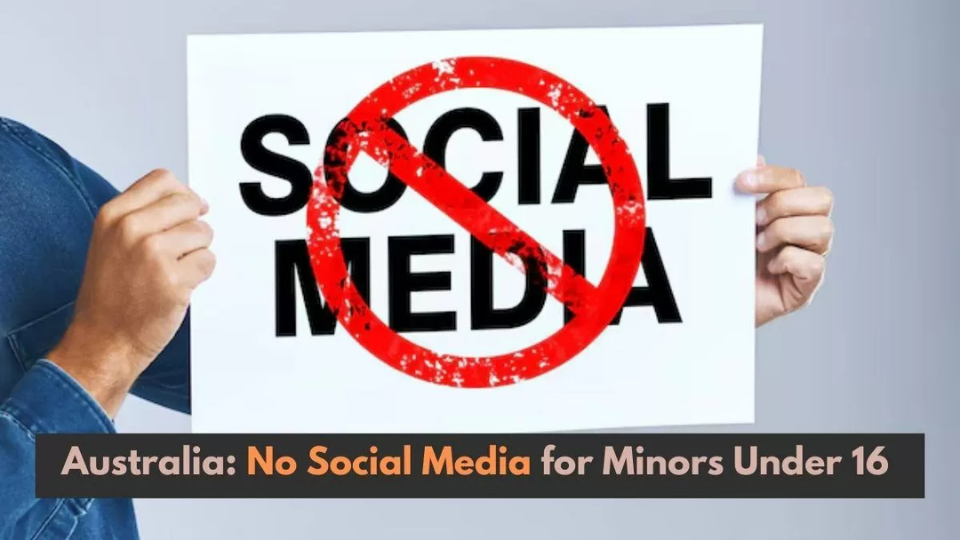
More countries are now looking at social media limits for teenagers after Australia introduced its under-16 ban.
In December 2025, Australia became the first country to ban social media use for children under 16. Since then, other nations have started considering similar laws.
Research by Statista shows that France and the United Kingdom may follow soon. As of early February, each country has passed a proposal in one chamber of its parliament.
The UK is considering a ban for children under 16. France’s proposal would apply to those under 15.
Six other countries have also announced plans at the leadership level. These include Indonesia, Malaysia, New Zealand, Spain, Greece, and Austria.
According to Statista, Indonesia, Malaysia, New Zealand, and Spain are considering restrictions for users under 16. Greece is aiming to limit access for those under 15, and Austria for those under 14.
Two more European countries—Portugal and Denmark—are proposing a different approach. They would allow social media use with parental consent. This model is already in place in France, Italy, and Brazil, where children can only access platforms if their parents agree.
Countries Moving Toward Social Media Limits for Minors
Statista reports that countries are at different stages when it comes to social media restrictions.
Enacted
Australia (Under 16)
Passed by One Parliament Chamber
France (Under 15)
United Kingdom (Under 16)
Initiative Announced by Leadership
Austria (Under 14)
Greece (Under 15)
Malaysia (Under 16)
Spain (Under 16)
Indonesia (Under 16)
New Zealand (Under 16)
Parental Consent Required
France (13 to 15 years old)
Italy (Under 14)
Norway (planned, under 15)
Brazil (Under 16)
Nebraska and Virginia in the US (Under 18)
Denmark (planned, 13 to 14 years old)
Portugal (planned, under 16)
The timeline for these rules is different in each country. In Brazil, the law is expected to take effect in March 2026. In Virginia, social media use may be limited to one hour per day.
Concerns About Social Media and Youth Mental Health
Statista notes that social media platforms are facing growing scrutiny. Platforms that use personalised algorithms and endless scrolling features are under special focus.
Experts are concerned about their impact on young users’ mental health. While social media addiction can affect people of all ages, teenagers are seen as more vulnerable. They are still developing social skills, body image awareness, and time management habits.
How Social Media Bans and Parental Controls Could Work
Strict bans, like Australia’s, are expected to rely on formal age-verification systems. These systems would check a user’s age before allowing access.
Parental consent models would likely use linked parent and child accounts. This would allow parents to monitor and approve their child’s activity.
Instagram has already introduced “Teen Accounts.” These accounts automatically place teenagers into built-in safety settings. The feature is available globally wherever Instagram operates.
Teen Accounts limit who can contact teenagers, control the type of content they see, and help manage screen time. Teenagers under 16 need parental permission to reduce these safety settings.
There are also added protections. Users under 16 cannot go Live without parental approval. They also cannot turn off the feature that blocks unwanted images in direct messages.
Also Read : PM Narendra Modi’s Assam Visit: Full Schedule and Itinerary