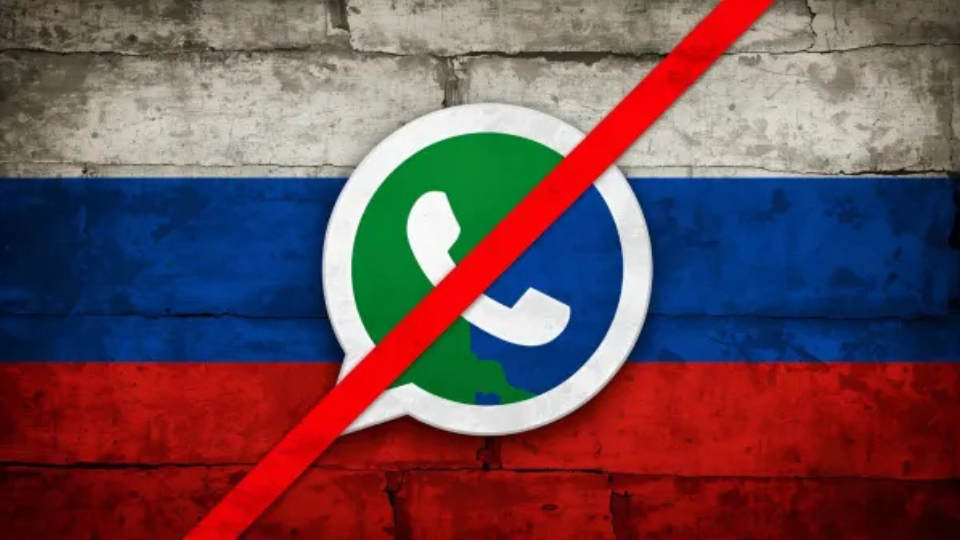
WhatsApp Faces Block in Russia as Meta Warns of Surveillance Risks
On Thursday, Meta-owned WhatsApp announced that the Russian government is attempting to completely block the app. This move affects more than 100 million users. WhatsApp stated that the goal of the block is to force people toward state-controlled apps that allow government surveillance, which puts user privacy and safety at risk.
In a post on X (formerly Twitter), WhatsApp said: “Today the Russian government attempted to fully block WhatsApp in an effort to drive people to a state-owned surveillance app. Trying to isolate over 100 million users from private and secure communication is a backwards step and can only lead to less safety for people in Russia. We continue to do everything we can to keep users connected.”
Russia’s Pattern of Restricting Messaging Apps
This move follows a long history of Russia restricting messaging services that do not follow its rules. The government has previously limited Telegram and targeted platforms that refuse to share user data with authorities.
While WhatsApp is working to keep its users connected, the Kremlin says the app must follow local laws to return. Kremlin spokesperson Dmitry Peskov told the TASS news agency that an agreement is possible if Meta enters a dialogue and follows Russian legislation. However, he noted that if Meta remains uncompromising, there is “no chance” for the app to be restored.
Telegram Founder Criticizes Government Pressure
Pavel Durov, the founder of Telegram, also recently spoke out against Russia’s actions. He claimed the government is slowing down Telegram to push citizens toward state-controlled apps built for censorship.
“Russia is restricting access to Telegram to force its citizens onto a state-controlled app built for surveillance and political censorship,” Durov wrote. He emphasized that Telegram will continue to stand for freedom and privacy despite the pressure.
A Growing Crackdown on Global Platforms
The tension has been building for some time. In 2025, Russia began limiting certain calls on both WhatsApp and Telegram. Officials accused these foreign platforms of refusing to share information with law enforcement regarding fraud and terrorism cases. In addition to these messaging apps, Russia also blocked Apple’s video-calling app, FaceTime, in December.
Also Read : CBSE Introduces On-Screen Marking for Class 12 Board Exams in 2026