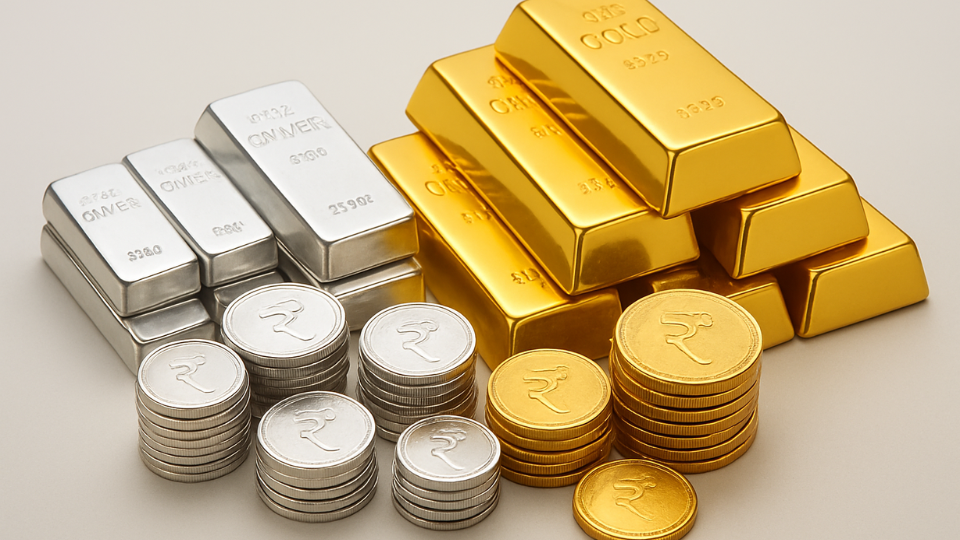
Budget 2026 has brought key changes for Sovereign Gold Bonds (SGBs) while keeping most taxation rules for gold and silver investments unchanged. With recent fluctuations in precious metal prices, many investors are wondering whether to buy or sell, and how their profits will be taxed.
How Gold and Silver Are Taxed
Profits from gold and silver are not taxed as a single asset class. The tax depends on factors like how long you hold the asset, the type of holding, and whether you sell or redeem it.
Union Budget 2026: Key Announcement for SGBs
Union Finance Minister Nirmala Sitharaman announced a major change affecting SGB investors. The Budget proposes removing the capital gains exemption for SGBs purchased from the secondary market.
Under this change, only original subscribers who hold their SGBs until maturity will continue to enjoy full tax exemption. Secondary buyers will lose this benefit from April 1, 2026, onward.
Sitharaman said in her Budget speech:
“It is proposed to provide that the exemption from capital gains tax in respect of Sovereign Gold Bonds shall be available only where such bonds are subscribed to by an individual at the time of original issue and are held continuously until redemption on maturity.”
She added that the rule will apply uniformly to all SGB issuances by the Reserve Bank of India. Previously, anyone holding SGBs until maturity could exit tax-free, but now the exemption applies only to original subscribers.
Tax on SGBs
For original subscribers, nothing changes. If you bought directly from RBI during the issue and hold the SGBs till maturity, redemption remains fully tax-exempt. Early redemption via RBI windows also follows existing rules.
- The 2.5% annual interest on SGBs is taxed according to your income-tax slab.
- Selling SGBs within 12 months treats gains as short-term capital and taxes them at slab rates.
- Selling after 12 months but before maturity (8 years) attracts 12.5% long-term capital gains tax without indexation.
From April 1, 2026, only original subscribers will get capital gains exemption at maturity.
Tax on Physical Gold and Silver
Physical gold and silver—jewellery, coins, bars—are treated as capital assets.
- Held up to 24 months → Short-term capital gains taxed at slab rates.
- Held beyond 24 months → Long-term capital gains taxed at 12.5% without indexation.
- GST applies at 3% on the purchase and 5% on making charges.
Tax on Digital Gold and Silver
Digital gold and silver are taxed like physical gold, except the 5% GST on making charges does not apply due to the digital format.
Gold and Silver ETFs
- Holding up to 12 months → Gains taxed at slab rates.
- Holding more than 12 months → Gains taxed at 12.5% without indexation.
ETFs are treated as listed securities for tax purposes.
Gold and Silver Mutual Funds
- Holding up to 24 months → Taxed at slab rates.
- Holding beyond 24 months → Taxed at 12.5% without indexation.
Tax on Inherited Gold and Silver
India does not have an inheritance tax. However, when inherited gold or silver is sold:
- Capital gains are calculated using the original owner’s purchase price.
- The holding period includes the time the asset was held by the previous owner.
Also Read : India’s Budget 2026: Key Reforms and Growth Plans