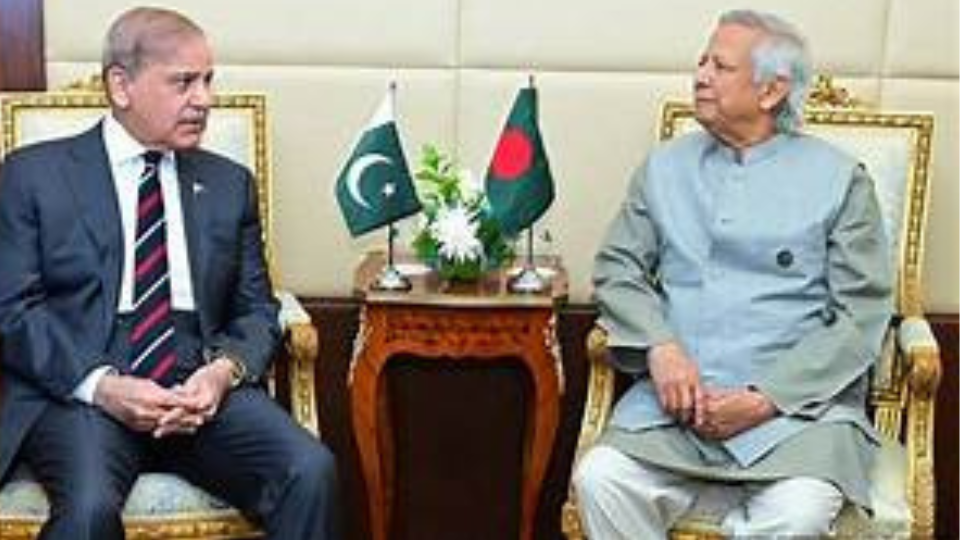
Bangladesh and Pakistan have resumed direct flights after 14 years, marking a reset in ties that could influence India’s regional strategy, airspace decisions, and South Asia relations. This move signals a significant change in South Asian geopolitics, as the two countries restore direct passenger flights after a long period of strained and historically tense relations.
The resumption of flights coincides with high-level discussions on a potential multi-million-dollar defence deal, showing a broader effort to improve bilateral ties.
A Biman Bangladesh Airlines flight from Dhaka landed at Karachi’s Jinnah International Airport on Thursday with a traditional water salute, ending a suspension that had been in place since 2012. Pakistan’s Airport Authority called the arrival the start of a “new chapter” in Pakistan–Bangladesh relations.
Under the new schedule, Biman will operate non-stop flights twice a week, on Thursdays and Saturdays. The Dhaka–Karachi flight leaves at 8:00 pm local time and arrives at 11:00 pm. The return flight departs Karachi at midnight and reaches Dhaka at 4:20 am. These flights are operating under a provisional licence valid until March 30, during which authorities will review their long-term feasibility.
This rapid rapprochement follows major political changes in Dhaka after the fall of the Sheikh Hasina government in August 2024. Hasina, seen as pro-India, left office after student-led protests and is now living in exile in India. An interim government led by Nobel laureate Muhammad Yunus is preparing for elections next month, with Hasina’s party banned.
At the same time, Islamabad has offered Bangladesh JF-17 Thunder multi-role fighter jets, co-developed by China and Pakistan. The proposal was discussed during talks between Pakistan Air Chief Marshal Zaheer Ahmed Baber Sidhu and Bangladeshi Air Chief Hasan Mahmood Khan.
Pakistan has also promised faster delivery of Super Mushshak trainer aircraft, along with training and support packages. This aligns with Islamabad’s broader push to expand defence exports, following a recent deal with Libya and ongoing talks with Azerbaijan.
The warming ties have implications for India, whose relations with both neighbours have cooled in recent months. One immediate issue is airspace, as the shortest Dhaka–Karachi route passes through central Indian airspace. It is not yet clear if Biman has secured overflight permission from New Delhi. For now, Pakistan’s Civil Aviation Authority has approved designated corridors within its airspace.
Momentum is also building as Bangladeshi authorities have approved private Pakistani carriers, including Fly Jinnah and AirSial, to operate direct services, suggesting further growth in connectivity.
For Pakistan, selling JF-17 jets to Bangladesh would showcase the aircraft’s capabilities, which Islamabad says were proven during past confrontations, including operations following India’s actions against Pakistan-based militants last year.
Overall, the return of flights and parallel defence talks indicate a rapid recalibration of Dhaka–Islamabad relations, reshaping regional dynamics at a sensitive moment for South Asia.
Also Read : Income Tax 2026: Key Budget Expectations for Middle-Class and Investors